
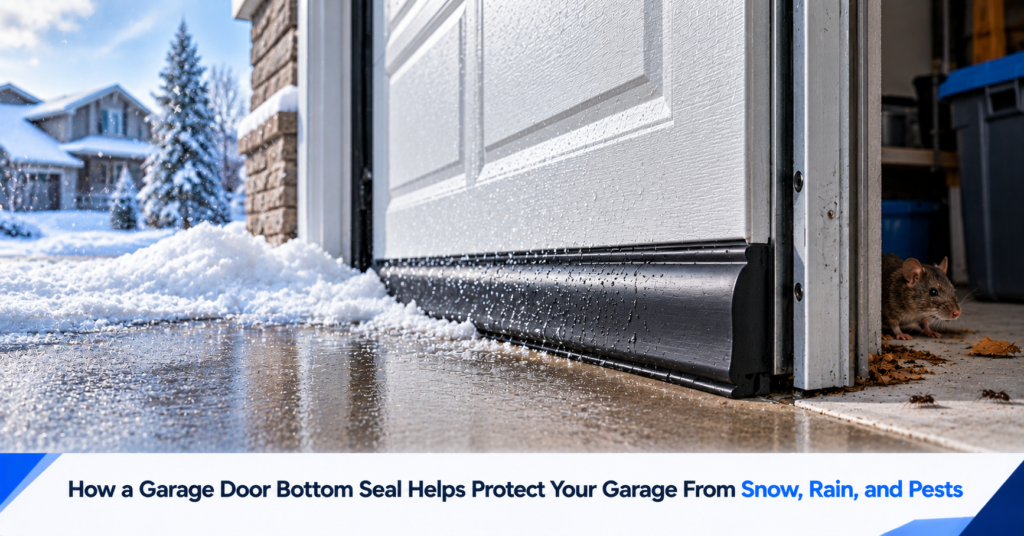
Take a look at the bottom edge of your garage door. That thin strip of rubber or vinyl is easy to overlook, but it does a lot of work. At Alfa Garage Doors, we see homeowners deal with wet floors, drafty garages, and unwanted critters, and the cause is often a worn or missing garage door bottom seal.
This guide explains what a bottom seal does, how it protects against snow, rain, and pests, how to tell when yours needs attention, and what to know before replacing it.
What Is a Garage Door Bottom Seal?
A garage door bottom seal, sometimes called a garage door weatherstrip or door sweep, is a flexible strip attached to the bottom edge of the door. When the door closes, the seal presses against the floor and fills the small gap between the door and the concrete.
That gap may look tiny, but it runs the full width of the door. Water, cold air, dust, and small animals can all slip through it.
Common Types of Bottom Seals
- Bulb or beaded seals slide into a track on the door and compress against the floor
- T-shaped seals use two small fins that fit into a channel on the bottom of the door
- J-type and double-J seals suit certain door styles and offer a flexible, wide contact surface
- U-shaped seals slip over the bottom edge of the door, often on doors without a built-in retainer
- Threshold seals attach to the floor instead of the door and work alongside the door seal
The right type depends on your door’s design, the width of the retainer track, and the condition of your garage floor.
How a Bottom Seal Protects Against Snow
Illinois winters mean heavy snowfall, drifting, and repeated freeze-thaw cycles. When snow piles against the door, it can melt and seep underneath. A healthy seal blocks that meltwater and keeps loose snow from blowing inside.
Preventing Ice Buildup
When meltwater gets under the door and refreezes, it can bond the door to the floor. A properly fitted seal limits how much water reaches that gap, which makes frozen-door problems less likely.
Keeping Cold Air Out
A bottom seal also cuts down on winter drafts. This matters most if your garage shares a wall with living space or if you use the garage as a workshop. Pairing a good seal with insulated garage doors helps the garage hold a steadier temperature.
How a Bottom Seal Protects Against Rain
Heavy spring storms and summer downpours push water across driveways toward the garage. Without a tight seal, that water flows straight underneath the door.
Reducing Water Intrusion and Dampness
Standing water on the garage floor can lead to musty smells, mildew on stored boxes, and rust on tools, bicycles, and the door’s own hardware. A flexible, intact seal creates a barrier that helps keep the floor dry.
Helping Protect the Door Itself
Moisture sitting at the base of the door can corrode the bottom panel and brackets over time. A good seal keeps that area drier and extends the life of the door’s lower section.
How a Bottom Seal Protects Against Pests
Pests are often what finally convinces homeowners to check their seals. Mice can squeeze through a gap about the width of a pencil. Insects, spiders, and even snakes can follow the same path.
Why Gaps Attract Pests
A garage offers shelter, stored items for nesting, and a way into the rest of the home. Pests tend to enter wherever they find a gap, and the bottom of the door is a common one, especially as a seal cracks, hardens, or pulls loose.
A Physical Barrier Is the First Line of Defense
A bottom seal can’t solve every pest issue, but it closes one of the easiest entry points. Combined with tidy storage and sealed side and top garage door weatherstripping, it makes the garage much less inviting.
Signs Your Garage Door Bottom Seal Needs Attention
Check your seal if you notice any of the following:
- Daylight visible under the closed door
- Cracked, brittle, flattened, or crumbling rubber
- Sections that are torn or hanging loose
- Water pooling inside the garage after rain
- Drafts or a noticeably colder garage in winter
- Leaves, dirt, or snow blowing in under the door
- Signs of mice, insects, or droppings near the door edge
- A seal that has shifted out of its retainer track
A Simple Daylight Test
Close the door on a bright day and look at the bottom edge from inside. You can also do this at night by having someone shine a flashlight along the base from outside. Any light you can see is a gap that air, water, and pests can use.
Choosing the Right Replacement Seal
Match the Seal to Your Door
Check the style of retainer on the bottom of your door. Some use a single channel, others use a double channel, and the width of that channel determines which seal will fit. A seal that doesn’t match won’t sit tightly.
Consider the Material
Rubber seals stay flexible in cold weather, which suits Illinois winters. Vinyl seals work well in many situations but can stiffen when temperatures drop. If your garage sees heavy snow and ice, flexibility in low temperatures matters.
Think About Your Garage Floor
Uneven or sloped floors can leave gaps that a flat seal won’t close. In those cases, a thicker bulb-style seal or an added threshold seal may seal more effectively.
Common Mistakes Homeowners Make
- Ignoring a small gap. Even a narrow opening lets in water, cold air, and pests.
- Buying the wrong size or style. A mismatched seal leaves gaps or slips out of the track.
- Forcing a seal into the retainer. Pulling too hard can bend the track or tear the seal.
- Replacing the seal but ignoring the door. If the door is out of alignment, the new seal won’t sit evenly.
- Skipping the sides and top. Bottom seals work best as part of a complete weather-sealing setup.
- Letting dirt and debris build up. Grit under the seal wears it down faster.
Expert Tips to Keep Your Seal Working Longer
- Inspect it each season. Check the seal before winter and again after the spring thaw.
- Keep the floor clean. Sweep away leaves, salt, and grit where the seal meets the concrete.
- Wipe the seal. A damp cloth removes dirt that can cause cracking.
- Clear snow and ice carefully. Don’t chip at ice around the seal with metal tools.
- Get the door checked while you’re at it. A seal only works if the door closes level and evenly, so regular garage door maintenance or a garage door tune-up keeps everything aligned.
- Call a professional for hard cases. If the door is uneven, damaged, or has a sagging bottom panel, a technician can address the root problem rather than just the seal.
Bottom Seal Protection for Illinois Homes
Northern Illinois weather tests garage doors with humid summers, heavy rain, snow, and ice. Homeowners in Streamwood, South Elgin, Grayslake, and Round Lake Beach often notice seal wear after a long winter or a stretch of wet spring weather.
Alfa Garage Doors helps homeowners in these communities with seal replacement, garage door repair, and full garage door installation when the door itself needs more than a new seal.
Frequently Asked Questions
What does a garage door bottom seal do?
It closes the gap between the bottom of the door and the floor, blocking snow, rain, drafts, dust, and pests while helping keep the garage cleaner and drier.
How do I know if my bottom seal needs replacing?
Look for visible light under the closed door, cracks or tears in the material, water entering after rain, or signs of pests. Any of these suggests the seal is no longer doing its job.
How often should a garage door bottom seal be replaced?
There’s no fixed schedule. Most seals last several years, but sun, ice, salt, and daily use wear them down. Seasonal checks will tell you when it’s time.
Can a bottom seal really keep mice out?
It can help by closing a common entry point. For best results, combine it with sealed side and top weatherstripping and keep stored items off the floor.
Can I replace the seal myself?
Many homeowners can replace a simple slide-in seal. If the door is heavy, uneven, or the retainer is damaged, a professional can make sure the new seal fits and seals properly.
Does a bottom seal help with winter drafts?
Yes. It blocks cold air from entering at floor level, which helps the garage stay more comfortable, especially when paired with an insulated door.
Final Thoughts
A garage door bottom seal is a small part with a big job. It keeps snow and rain outside, blocks drafts, and closes one of the easiest paths pests use to get in. Check yours each season, replace it when it cracks or flattens, and make sure the door itself is aligned so the seal can do its job. If you’re not sure what your garage needs, a professional inspection can point you in the right direction.
Contact Alfa Garage Doors Today
Need fast and reliable garage door service? Whether you need emergency garage door repair, garage door opener repair, spring replacement, maintenance, or a brand-new garage door installation, the experienced team at Alfa Garage Doors is ready to help. We proudly provide professional garage door services throughout Illinois with quality workmanship, affordable pricing, and 24/7 availability.
Get in Touch With Us
Phone: +1 (847)749-6700
Website: alfagaragedoors.net
Summary
A garage door bottom seal closes the gap between the door and the floor, blocking snow, rain, drafts, and pests like mice and insects. Checking it regularly and replacing worn rubber or vinyl keeps the garage drier, cleaner, and more comfortable through every Illinois season.