
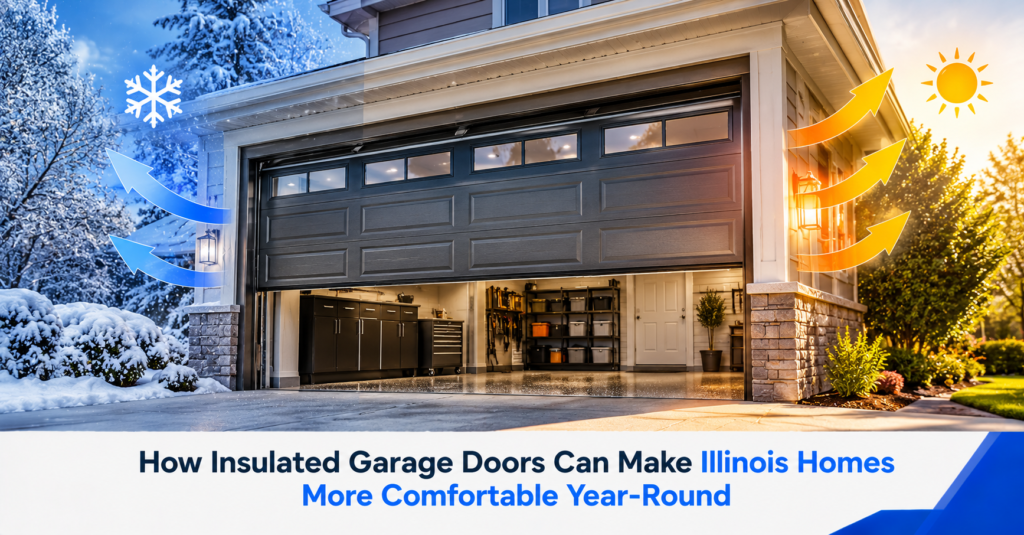
Illinois weather doesn’t do things halfway. Summers get hot and humid, winters bring brutal cold and heavy snow, and spring and fall swing between both extremes within the same week. For homeowners wondering why their garage never seems comfortable no matter the season, the door itself is often the reason. At Alfa Garage Doors, insulated doors are one of the upgrades we recommend most often to Illinois homeowners looking for real, lasting comfort.
This guide looks at how insulated garage doors actually improve comfort throughout the year, what makes them different from standard doors, and what to consider before upgrading.
Why Illinois Homes Need More Than a Standard Garage Door
A standard, uninsulated garage door is essentially a single sheet of metal standing between your garage and the outside world. In a mild climate, that might not matter much. In Illinois, where temperatures can swing more than 100 degrees across the year, an uninsulated door struggles to keep pace.
The Garage’s Role in Overall Home Comfort
Many Illinois homes have a garage that shares at least one wall with living space, whether it’s a bedroom above, a laundry room beside it, or a home office nearby. When the garage door isn’t insulated, outdoor temperatures transfer more easily into that shared space, making those rooms harder to keep comfortable regardless of how well the rest of the house is sealed.
How Insulation Actually Works in a Garage Door
Insulated doors use a layer of material, usually polystyrene or polyurethane foam, sandwiched between the door’s exterior panels. This layer slows the transfer of heat and cold, keeping outdoor temperature swings from immediately affecting the garage’s interior.
Polystyrene vs. Polyurethane
Polystyrene panels are lightweight and offer moderate performance, often used in doors with a basic insulated option. Polyurethane foam is injected directly into the door during manufacturing, expanding to fill every gap and bonding to the steel panels. This creates a stronger, better-insulated, and quieter door overall.
Why R-Value Matters More in Illinois
R-value measures how well a material resists heat transfer. In a climate with Illinois’s seasonal extremes, a higher R-value makes a noticeable difference. A door rated R-12 to R-18 will perform significantly better through both January cold snaps and July heat waves than a door with a low or nonexistent R-value.
Comfort Benefits Through Every Illinois Season
Winter: Blocking the Cold
During Illinois winters, an insulated door reduces how much cold air transfers into the garage, which helps protect pipes, stored items, and any equipment kept there. It also keeps attached rooms from feeling the chill that an uninsulated door would let through.
Summer: Managing the Heat and Humidity
Illinois summers bring both heat and humidity, and an uninsulated door absorbs outdoor heat and radiates it inward. An insulated door slows that process, keeping the garage from turning into a heat trap that pushes warm air into the rest of the house.
Spring and Fall: Handling Unpredictable Swings
Illinois spring and fall are known for rapid temperature changes and higher humidity. Insulated doors help stabilize the garage’s interior temperature during these transitional months, reducing the condensation buildup that can lead to rust or mildew over time.
Everyday Comfort Advantages Beyond Temperature
Noise Reduction
Insulated doors are denser than single-layer doors, which naturally dampens outside noise and operational sound. This is especially noticeable in homes where the garage sits close to a bedroom or living area.
A More Usable Garage Space
Many Illinois homeowners use their garage as a workshop, gym, or extra storage space. Garage door insulation helps keep that space at a more consistent, usable temperature throughout the year, rather than becoming too hot or too cold to spend time in.
Durability Against Illinois Weather
The layered construction of insulated doors tends to be sturdier than single-layer panels, offering better resistance to dents and warping from temperature stress, wind, and general wear over time.
Common Mistakes Homeowners Make
- Choosing a door based only on appearance, without checking the R-value or core material
- Assuming all insulated doors perform the same, when polystyrene and polyurethane cores differ significantly in effectiveness
- Ignoring the weatherstripping and seals, which can undercut even a well-insulated door’s performance
- Skipping professional installation, which can leave gaps that reduce real-world insulation performance
- Overlooking the opener and hardware, which also affect how well the door seals and operates over time
Expert Tips for Choosing an Insulated Door for an Illinois Home
- Prioritize polyurethane-core doors for the best performance against both summer heat and winter cold.
- Choose a higher R-value if your garage shares a wall with living space or gets regular use as a workshop or gym.
- Pair insulation with quality weatherstripping. A well-insulated panel still needs tight seals to perform as intended.
- Have the door professionally installed and sealed. Proper fit matters as much as the insulation itself.
- Ask about layer count. Triple-layer steel-insulation-steel construction typically offers the best balance of strength and comfort.
Insulated Garage Doors Across Illinois Communities
Homeowners throughout Schaumburg, Elgin, Algonquin, and Palatine deal with some of the most demanding seasonal swings in the Midwest, from humid summers to heavy snow and ice in winter. In these areas, an insulated garage door isn’t just a comfort upgrade; it’s a practical response to real year-round weather extremes.
Alfa Garage Doors works with homeowners across these communities to select and install insulated doors suited to the specific demands of Illinois weather, rather than offering a one-size-fits-all solution.
Frequently Asked Questions
Do insulated garage doors really make a noticeable difference in Illinois?
Yes. Given the state’s wide seasonal swings, insulated doors noticeably reduce temperature extremes in the garage and in any attached living spaces.
What R-value is recommended for Illinois homes?
Many homeowners benefit from an R-value of 12 or higher, with R-16 to R-18 offering stronger performance for garages used as living or workspace.
Will an insulated door lower my energy bills?
While results vary by home, reducing heat transfer through the garage door can ease the load on your home’s heating and cooling system, particularly if the garage shares a wall with living space.
Can I add insulation to my current garage door instead of replacing it?
Retrofit insulation kits exist, but they typically don’t match the performance of a door built with insulation from the start, especially in extreme climates like Illinois.
Are insulated doors harder to maintain than standard doors?
No. Maintenance is similar to standard doors, though it’s worth checking the weatherstripping and seals periodically to make sure the door’s insulating performance stays intact.
Contact Alfa Garage Doors Today
Need fast and reliable garage door service? Whether you need emergency garage door repair, garage door opener repair, spring replacement, maintenance, or a brand-new garage door installation, the experienced team at Alfa Garage Doors is ready to help. We proudly provide professional garage door services throughout Illinois with quality workmanship, affordable pricing, and 24/7 availability.
Get in Touch With Us
Phone: +1 (847)749-6700
Website: alfagaragedoors.net
Final Thoughts
Illinois weather asks a lot of a garage door, and a standard, uninsulated panel often can’t keep up. An insulated garage door helps stabilize temperatures, reduce noise, and protect both your garage and the rooms connected to it, season after season. If your current door is struggling to handle the state’s extremes, it may be time to explore an insulated option built for the climate you actually live in.
Summary
Insulated garage doors help Illinois homes stay more comfortable year-round by reducing heat transfer during hot, humid summers and blocking cold during harsh winters. They also lower noise, protect attached living spaces, and keep garages more usable in every season.