
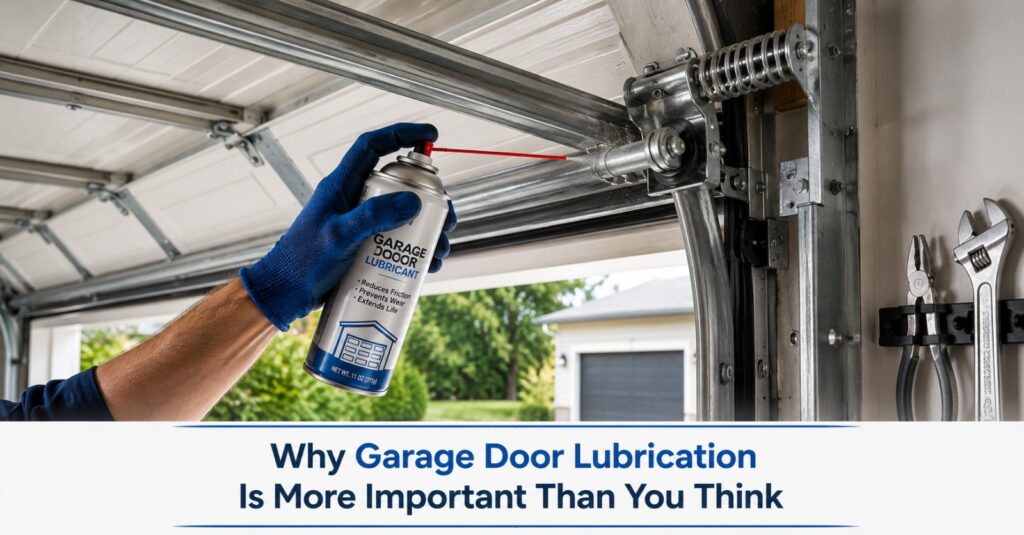
Most homeowners lubricate their car regularly without a second thought, but the garage door, a system that opens and closes just as often, rarely gets the same attention.
At Alfa Garage Door, we see the results of this gap constantly: doors that could have run smoothly for years instead wear out early, simply because a five-minute task got skipped.
Lubrication sounds minor, but it’s one of the few maintenance habits that genuinely extends the life of nearly every moving part on your door.
What Garage Door Lubrication Actually Does
Reduces Friction Between Moving Parts
Every time your door opens or closes, metal parts slide and rotate against each other. Without lubrication, that contact creates friction, and friction generates heat and wear with every single cycle.
Prevents Premature Wear on Springs and Cables
Springs and cables are engineered for a set number of open-and-close cycles. Reducing unnecessary friction on related parts helps the whole system operate as intended, rather than working harder than it needs to.
What Happens When You Skip It
A dry, unlubricated door doesn’t fail all at once. It wears down gradually, and the signs are easy to dismiss until they aren’t.
Rollers grind against dry tracks, hinges stiffen and squeak, and the opener motor has to work harder to compensate for all that added resistance. Over time, this accelerates wear on parts that are expensive and sometimes dangerous to replace, particularly springs and cables.
The Parts of Your Garage Door That Need Lubrication
Rollers and Hinges
These see constant motion and benefit the most from regular lubrication. Dry rollers are often the first source of that classic garage door squeak.
Springs
Both torsion and extension springs should be lightly lubricated to reduce friction as they coil and uncoil. This is one of the simplest ways to support a longer spring lifespan.
Tracks
The tracks themselves don’t need heavy lubrication, but a light coating helps rollers glide smoothly instead of catching or grinding.
Opener Chain, Screw, or Belt Drive
If your opener uses a chain or screw drive, it needs its own lubrication schedule, separate from the door hardware, to keep the mechanism running quietly and efficiently.
A Simple Step-by-Step Lubrication Routine
Getting this right doesn’t require any special skill, just a bit of consistency.
- Wipe down the tracks and rollers with a clean cloth to remove dust and old grime before applying anything new.
- Apply a light coat of silicone spray or white lithium grease to the rollers, hinges, and springs, focusing on the pivot points where metal meets metal.
- Run the door through a few full open-and-close cycles so the lubricant works its way into every moving joint.
- Wipe away any excess that hasn’t absorbed, so it doesn’t attract dust or drip over time.
- Lubricate the opener’s chain, screw, or belt separately, following the manufacturer’s guidance for that specific drive type.
The whole process takes only a few minutes, but doing it consistently is what actually makes the difference.
Choosing the Right Lubricant (and What to Avoid)
A silicone-based spray or white lithium grease is the standard recommendation for garage door hardware. Both resist dust buildup and hold up well across temperature swings.
WD-40 is a common household grab, but it’s actually a poor long-term choice here. It’s a solvent more than a true lubricant, which means it evaporates quickly and can attract dust and grime rather than repelling it.
How Often Should You Lubricate Your Garage Door?
Twice a year is a reasonable baseline for most homes. If your garage sees heavy daily use, or your area experiences extreme summer heat and winter cold, lubricating slightly more often helps the door handle those seasonal swings without extra strain.
Signs Your Garage Door Needs Lubrication Right Now
- A squeaking or grinding sound during operation
- Jerky, uneven movement instead of a smooth glide
- The door feels slower to respond than it used to
- Visible rust or dryness on rollers, hinges, or springs
Common Mistakes to Avoid When Lubricating
- Skipping cleaning first. Lubricating over dirt and grime just traps debris against the hardware.
- Using the wrong product. Household oils like WD-40 or cooking oil break down quickly and attract more dust.
- Over-lubricating. Excess product drips, collects grime, and can end up on the garage floor.
- Ignoring the opener’s drive mechanism. The chain, screw, or belt needs its own attention, separate from the door hardware.
Expert Tips for a Smoother, Longer-Lasting Garage Door
Pair lubrication with a quick visual inspection each time. While you’re already at the door, check for fraying cables, visible spring gaps, or loose hardware. This turns a simple lubrication routine into a genuine mini tune-up that catches problems early.
Wipe away excess lubricant after application so it doesn’t attract dirt or drip onto your driveway.
When Lubrication Isn’t Enough
Lubrication helps with friction and noise, but it won’t fix a structural issue. If your door is still noisy, slow, or uneven after a proper lubrication routine, the problem likely points to something mechanical.
Worn rollers, an unbalanced spring, or opener wear are common culprits that lubrication alone can’t resolve. At that point, a professional inspection is the more reliable next step, since guessing at the cause can lead to fixing the wrong part while the real issue keeps getting worse.
Maintenance Habits Homeowners Across the Area Rely On
Routine care matters even more through a full Chicagoland winter. Homeowners in McHenry and Mundelein often stick to a twice-yearly lubrication schedule timed around seasonal changes, while those in Libertyville and Grayslake frequently pair it with a broader annual inspection to catch wear before the cold sets in.
FAQs
What household products can I use instead of a specialized garage door lubricant?
It’s best to avoid household substitutes like cooking oil or WD-40. A silicone-based spray or white lithium grease, both inexpensive and widely available, is the more reliable choice.
Can over-lubricating damage my garage door?
It won’t damage the door directly, but excess lubricant attracts dust and grime, which can actually increase friction over time instead of reducing it.
Does garage door lubrication help with noise reduction?
Yes, dry or worn hardware is one of the most common causes of a noisy garage door, and proper lubrication often resolves it almost immediately.
Is it safe to lubricate the springs myself?
Applying a light coat of lubricant to springs is generally safe, but never attempt to adjust, tighten, or repair the springs themselves without professional training.
How long does a lubrication routine take?
Most homeowners can complete a full lubrication routine in under fifteen minutes once they know which parts to target.
Contact Alfa Garage Doors Today
Need fast and reliable garage door service? Whether you need emergency garage door repair, garage door opener repair, spring replacement, maintenance, or a brand-new garage door installation, the experienced team at Alfa Garage Doors is ready to help. We proudly provide professional garage door services throughout Illinois with quality workmanship, affordable pricing, and 24/7 availability.
Get in Touch With Us
Phone: +1 (847) 749-6700
Final Thoughts
Garage door lubrication is one of the smallest maintenance tasks with one of the biggest paybacks. It reduces wear, cuts down on noise, and helps your springs, cables, and opener last as long as they’re built to.
A few minutes twice a year is a small habit that pays off in a quieter, smoother, longer-lasting garage door.
Summary
Garage door lubrication reduces friction on rollers, hinges, springs, tracks, and the opener’s drive mechanism, preventing premature wear, sagging, and noisy operation. Applying a silicone-based lubricant twice a year, rather than household oils like WD-40, helps the entire door system last significantly longer and run more smoothly year-round.