
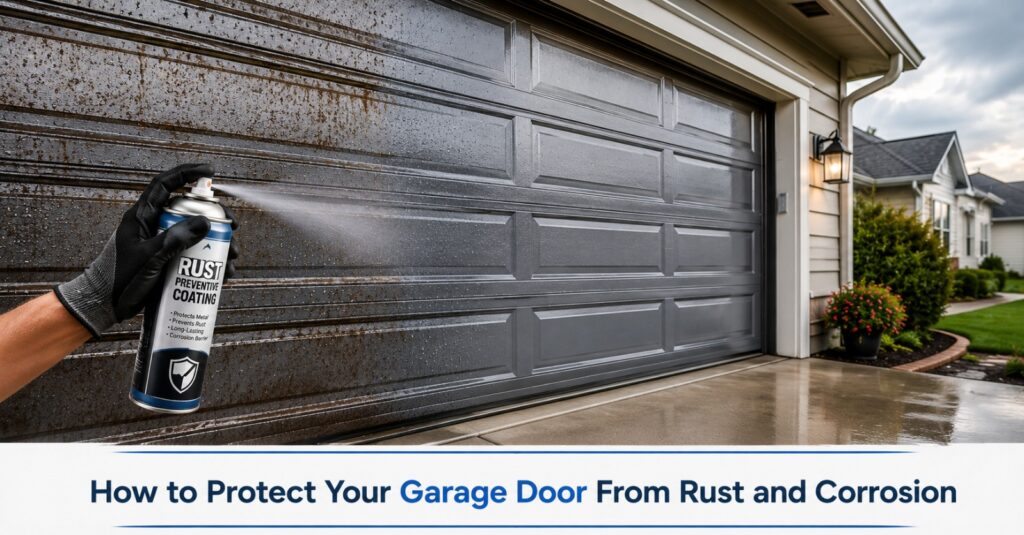
Rust rarely shows up overnight. It starts as a tiny spot near the bottom edge or a hinge, easy to miss until it’s spread into something far harder to fix.
At Alfa Garage Door, we see this pattern constantly, especially through the freeze-thaw cycles and road salt exposure that come with a full Midwest winter.
The good news is that rust and corrosion are largely preventable with a few consistent habits. Here’s what actually causes it, and how to keep it off your door for good.
Why Rust Is Such a Common Garage Door Problem
Moisture and Humidity Are the Main Triggers
Steel corrodes when moisture sits on its surface long enough to react with the metal. Garages naturally trap humidity, especially with limited airflow, which creates the exact conditions rust needs to take hold.
Road Salt and De-Icing Chemicals Make It Worse
Salt accelerates corrosion significantly. Every winter, cars track salt and de-icing chemicals into the garage, where it collects near the base of the door and hardware without anyone noticing.
Where Rust Typically Starts on a Garage Door
The Bottom Panel and Edges
This section sits closest to moisture, snow melt, and road salt, making it the most common starting point for visible rust.
Hardware, Hinges, and Springs
Metal hardware often corrodes before the door panels themselves, since it’s frequently overlooked during routine cleaning.
Tracks and Rollers
Rust here doesn’t just look bad, it also interferes with smooth operation, adding friction exactly where the door needs to move freely.
Early Warning Signs of Rust and Corrosion
- Small orange or brown spots near seams, edges, or hardware
- Bubbling or flaking paint
- Stiffness or grinding during operation
- Rust-colored streaks on the driveway below the door
Simple Habits That Prevent Rust Before It Starts
Rinse Off Salt and Grime Regularly
A quick rinse of the lower panel and nearby hardware during winter months removes salt residue before it has time to sit and react with the metal.
Keep the Area Around the Door Dry
Standing water at the base of the door is one of the biggest contributors to bottom-panel rust. Clearing debris from the threshold and checking that water drains away from the garage helps keep that area dry.
Touch Up Paint and Coating Damage Early
A small paint chip might seem cosmetic, but it exposes bare metal to moisture. Touching it up promptly is far easier than dealing with spreading rust later.
Choosing Rust-Resistant Materials From the Start
If you’re due for a replacement, material choice matters more than most homeowners realize. Galvanized steel with a quality powder coating resists corrosion significantly better than uncoated steel.
Aluminum and fiberglass doors take this a step further, since they don’t rust at all, though each comes with its own trade-offs in durability and insulation. The right choice usually depends on how much exposure your door gets and how much upkeep you’re realistically willing to do.
How to Treat Early Rust Before It Spreads
Light surface rust can often be addressed with a wire brush to remove loose material, followed by a rust-inhibiting primer and matching touch-up paint. This works well for small, early-stage spots.
Once rust has eaten through the metal or spread across a larger area, patching it becomes far less effective. At that point, panel or hardware replacement is usually the more lasting fix.
The Best Time of Year to Focus on Rust Prevention
Late fall, right before winter sets in, is the ideal window to get ahead of rust. A thorough cleaning and inspection at this point removes any buildup from the previous season and gives paint or coating touch-ups time to cure before freezing temperatures arrive.
Early spring is worth a second look too. This is when winter’s cumulative damage, from months of salt exposure and moisture, tends to become visible for the first time. Catching it here, before summer humidity adds another layer of risk, keeps small spots from turning into bigger repairs.
Common Mistakes That Speed Up Corrosion
- Ignoring small rust spots. What looks minor today spreads steadily once it starts.
- Pressure washing directly into hardware. This forces water into joints and seams instead of just cleaning the surface.
- Skipping drainage checks. Clogged gutters or poor grading near the garage sends more water toward the door than necessary.
- Letting salt residue sit all winter. A quick rinse now and then prevents months of buildup.
Expert Tips for Long-Term Protection
Pair rust prevention with your regular lubrication routine, since you’re already inspecting hardware closely during that process. Applying a light rust-inhibiting spray to hinges and springs adds an extra layer of protection with very little added effort.
Checking your gutters and downspouts once or twice a year also helps, since water redirected away from the garage means less moisture reaching the door in the first place.
When Rust Becomes a Structural Concern
Surface rust on panels is mostly cosmetic if caught early, but corrosion on structural hardware is a different story. Rust on the torque tube, springs, or cables can weaken parts that are already under significant tension, which raises real safety concerns rather than just appearance issues.
If you notice rust on any of these components, it’s worth having a professional inspect the hardware rather than relying on a quick paint touch-up.
Homeowners Across the Area Dealing With Seasonal Wear
Winter road salt and moisture take a real toll across the region. Homeowners in Antioch and South Elgin often notice bottom-panel rust first, given how much salt tracks in during the coldest months.
In Lake in the Hills and Round Lake Beach, hardware corrosion tends to show up more, particularly on older doors that haven’t had hinges or springs inspected in a while.
FAQs
Can rust on a garage door be fixed, or does it need replacement?
Small, early-stage rust can usually be treated with cleaning, a rust-inhibiting primer, and touch-up paint. Larger or structural rust typically requires panel or hardware replacement.
Does a galvanized steel door still rust?
It’s far more resistant than standard steel, but no coating is entirely rust-proof forever, especially if the coating itself gets scratched or damaged.
How often should I inspect my garage door for rust?
Checking every few months, especially after winter, catches small spots early before they have a chance to spread.
Is surface rust dangerous, or just cosmetic?
Rust on panels is mostly cosmetic if caught early. Rust on structural hardware like springs or the torque tube is a safety concern that deserves prompt attention.
What’s the best way to clean road salt off a garage door?
A simple rinse with water, followed by a dry wipe-down, removes most residue. Avoid harsh chemical cleaners that can strip protective coatings.
Contact Alfa Garage Doors Today
Need fast and reliable garage door service? Whether you need emergency garage door repair, garage door opener repair, spring replacement, maintenance, or a brand-new garage door installation, the experienced team at Alfa Garage Doors is ready to help. We proudly provide professional garage door services throughout Illinois with quality workmanship, affordable pricing, and 24/7 availability.
Get in Touch With Us
Phone: +1 (847) 749-6700
Final Thoughts
Rust and corrosion are almost always preventable with a bit of consistency. Rinsing off salt, keeping the area around the door dry, and catching small paint damage early go a long way toward protecting your investment.
A garage door that gets a little routine attention through the winter months tends to look better and last longer than one left to fend for itself.
Summary
Protecting a garage door from rust means rinsing off winter road salt regularly, keeping the base of the door dry, and touching up paint damage before bare metal is exposed. Choosing rust-resistant materials like galvanized steel or fiberglass also helps prevent long-term corrosion on panels and hardware.