
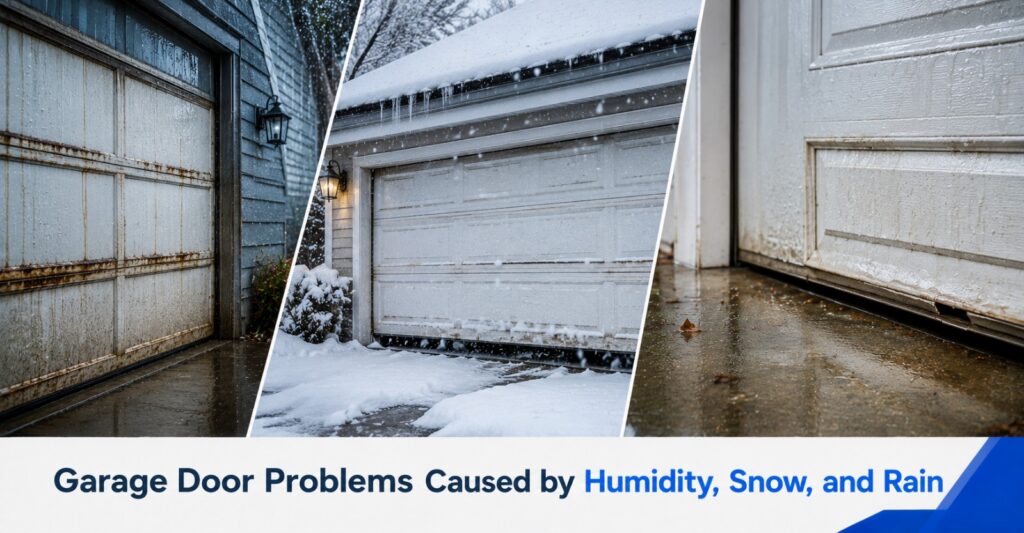
At Alfa Garage Doors, we see it every season — homeowners calling in with garage door problems that trace directly back to the weather. Humidity, snow, and rain don’t just make your garage messy; they actively wear down the mechanical, electrical, and structural parts of your garage door system. Understanding how each weather condition affects your door can help you catch small issues before they turn into major repairs.
This guide breaks down exactly how garage door weather damage happens across different conditions, what to watch for, and how to protect your door no matter what the forecast brings.
How Weather Affects Your Garage Door System
Your garage door isn’t just a panel that goes up and down — it’s a system of tracks, rollers, springs, cables, sensors, and a motorized opener, all exposed to the elements every time the door operates. Moisture, temperature swings, and precipitation each stress these components differently. Left unaddressed, weather exposure accelerates wear and shortens the life of parts that would otherwise last for years.
Why Seasonal Climate Matters
In regions with real seasonal extremes — hot, humid summers and cold, snowy winters — garage doors face a wider range of stress than in milder climates. That means homeowners need to think about weatherproofing as an ongoing maintenance task, not a one-time fix.
Humidity-Related Garage Door Problems
Rust and Corrosion
Persistent humidity is one of the most common causes of metal deterioration on garage doors. Springs, hinges, rollers, and tracks are all vulnerable to rust when moisture sits on the metal surface for extended periods. Rust doesn’t just look bad — it weakens components and can cause sudden mechanical failure, especially in torsion springs under tension.
Wood Panel Swelling and Warping
If your garage door has wood or wood-composite panels, humidity can cause the material to absorb moisture, swell, and eventually warp. This throws off the door’s alignment, making it harder to open and close smoothly, and can crack the finish over time.
Sensor and Electronic Malfunctions
Garage door openers rely on safety sensors near the bottom of the tracks. High humidity can cause condensation to form on these sensors, leading to false readings, a door that won’t close, or intermittent operation. Garage door opener repair is one of the most frequent service calls tied to humidity-related sensor issues.
Snow and Ice-Related Garage Door Problems
Frozen Tracks and Rollers
When snow melts and refreezes around the base of the door, it can freeze the door to the ground or stiffen the rollers inside the tracks. Forcing a frozen door open with the opener can strain the motor or bend the tracks, leading to more serious damage.
Increased Strain on the Garage Door Opener
Cold temperatures thicken lubricant and make metal components more brittle, which means your opener has to work harder to lift a door that isn’t moving as freely. Over time, this added strain shortens the opener’s lifespan and increases the chances of a sudden breakdown.
Ice Buildup on the Bottom Seal
Ice accumulation along the bottom weatherstripping can prevent the door from sealing properly, letting cold air into the garage and, in some cases, damaging the seal itself. A compromised seal also allows melted snow to pool near the door, worsening the cycle.
Rain and Water-Related Garage Door Problems
Water Damage to Panels and Insulation
Heavy or sustained rain can seep into seams, damaged weatherstripping, or areas where the door doesn’t sit flush against the frame. Over time, this leads to water stains, panel damage, and, for insulated doors, reduced insulating performance if moisture gets trapped inside the panel core.
Poor Drainage and Flooding Risks
Driveways and garage entryways that don’t slope properly can allow rainwater to pool at the base of the door. Standing water accelerates corrosion on tracks and hardware and increases the risk of water entering the garage itself.
Electrical Component Exposure
Openers, wiring, and keypads exposed to wind-driven rain are at risk of short circuits or corrosion over time. This is especially relevant for garages with exterior-facing electrical components or older wiring that wasn’t originally sealed for weather exposure.
Common Mistakes Homeowners Make
- Ignoring small rust spots, assuming they’re cosmetic rather than an early warning sign
- Forcing a frozen or stuck door instead of manually clearing ice first
- Skipping seasonal weatherstripping checks, which lets moisture and cold air in gradually
- Delaying garage door maintenance until a full breakdown happens, rather than catching problems early
- Overlooking drainage issues around the driveway or garage entrance
Expert Tips for Weatherproofing Your Garage Door
- Inspect weatherstripping regularly. Replace cracked or brittle seals before they let in moisture and cold air.
- Lubricate moving parts seasonally. Use a silicone-based lubricant on rollers, hinges, and tracks to reduce friction and resist moisture buildup.
- Clear snow and ice promptly. Never force a frozen door — clear visible ice from the base and tracks before operating it.
- Check drainage around the garage. Make sure water flows away from the entrance rather than pooling near the door.
- Schedule an annual inspection. A professional garage door maintenance visit can catch rust, misalignment, or sensor issues before they cause a breakdown.
Garage Door Weather Protection Across the Chicago Suburbs
Homeowners in Cary, Huntley, Carpentersville, and Lake in the Hills deal with some of the most demanding seasonal conditions in the region — humid summers, heavy snowfall, and unpredictable spring rain. These swings put real stress on garage door hardware, openers, and seals throughout the year.
Alfa Garage Doors works with homeowners across these communities to inspect, maintain, and repair garage doors affected by weather exposure, helping avoid the kind of sudden failures that tend to show up at the worst possible time.
Frequently Asked Questions
Can humidity really damage a metal garage door?
Yes. Persistent moisture leads to rust on springs, hinges, and tracks, which weakens components and can eventually cause mechanical failure if left unaddressed.
What should I do if my garage door is frozen to the ground?
Avoid using the opener to force it open. Gently clear visible ice from the base and weatherstripping first, then test the door manually before using the opener.
Does rain affect garage door openers?
It can, especially if wiring or electrical components are exposed to wind-driven rain. Sealing gaps and keeping the opener’s housing dry helps prevent corrosion and short circuits.
How often should I check my garage door for weather damage?
A seasonal check — especially before winter and after heavy rain periods — helps catch rust, seal damage, or drainage issues before they become bigger problems.
Can weather damage shorten the lifespan of a garage door opener?
Yes. Cold temperatures and humidity both add strain to the motor and moving parts, which can reduce the opener’s overall lifespan without regular maintenance.
Contact Alfa Garage Doors Today
Need fast and reliable garage door service? Whether you need emergency garage door repair, garage door opener repair, spring replacement, maintenance, or a brand-new garage door installation, the experienced team at Alfa Garage Doors is ready to help. We proudly provide professional garage door services throughout Illinois with quality workmanship, affordable pricing, and 24/7 availability.
Get in Touch With Us
Phone: +1 (847)749-6700
Website: alfagaragedoors.net
Final Thoughts
Humidity, snow, and rain each put unique stress on your garage door, from rusting hardware to frozen tracks to water damage around seals and panels. Catching these issues early through regular inspection and maintenance is the most effective way to avoid a sudden, inconvenient breakdown. If your garage door has been struggling to keep up with the seasons, it may be time to have it professionally checked before the next weather shift.
Summary
Humidity, snow, and rain cause garage door problems like rust, frozen tracks, sensor malfunctions, and water damage to panels and seals. Regular maintenance, proper weatherstripping, and prompt attention to ice or moisture buildup help prevent costly weather-related garage door failures year-round.