
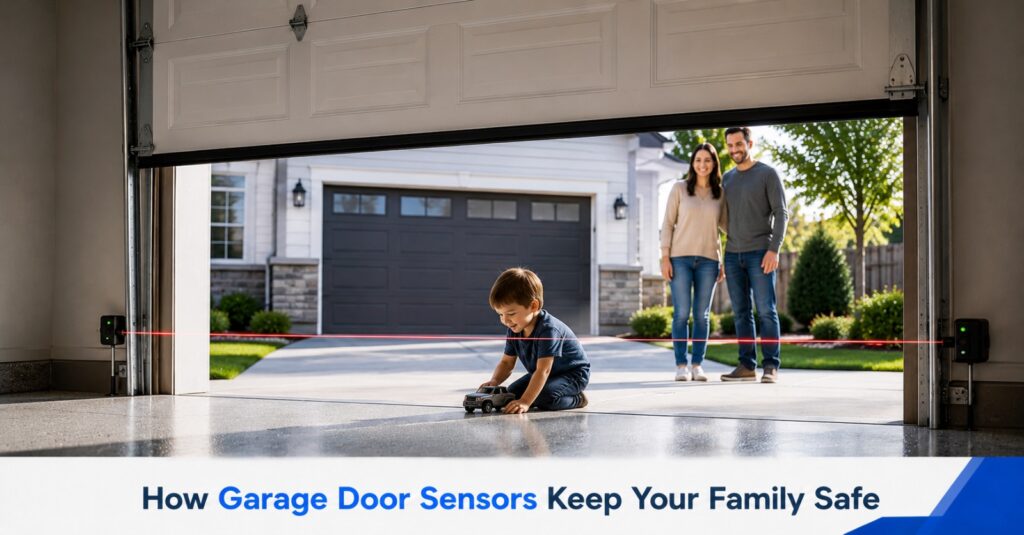
A child chasing a ball toward the garage. A dog darting out just as the door starts to close. These moments happen fast, and they’re exactly why garage door sensors exist.
At Alfa Garage Doors, we think every parent and pet owner should understand how these small devices work, since they’re quietly doing one of the most important safety jobs in the house.
Here’s what these sensors actually do, and how to make sure they’re protecting your family the way they’re supposed to.
Why Garage Door Sensors Exist in the First Place
Garage doors are heavy enough to cause real harm if they close on a person or pet. Sensors were introduced specifically to prevent that outcome, stopping and reversing the door automatically before contact happens.
How Photo-Eye Sensors Actually Protect Your Family
The Invisible Beam Explained
Two small sensors sit near the bottom of the tracks, facing each other across the doorway. One projects an invisible infrared beam, and the other receives it, creating an active line that spans the entire opening.
What Happens When the Beam Is Broken
If anything, a child, a pet, a stray toy, crosses that beam while the door is closing, the door stops and reverses immediately. This happens before contact, not after, which is what makes it such an effective safety layer.
Force Sensors: A Second Layer of Protection
Beyond the photo-eye beam, many doors also include a force sensor that detects resistance along the door’s bottom edge. If the door meets unexpected resistance, even in a spot the beam might miss, this second system triggers a reversal as a backup layer of protection.
Why Sensor Height and Placement Matter for Kids and Pets
Sensors are deliberately positioned low, typically around six inches off the ground, specifically because that height catches smaller children and pets that a higher-mounted sensor might miss entirely. This placement isn’t arbitrary; it’s a direct response to how families actually use their garages.
Common Reasons Sensors Stop Working Properly
Dust and cobwebs are the most frequent culprits, gradually blocking the beam without anyone noticing. Direct sunlight hitting a sensor at certain times of day can also interfere with its signal.
A sensor bumped out of alignment by a stored bike or ladder is more common than most homeowners expect, and it’s often the easiest cause to overlook.
How to Test Your Sensors as a Family Safety Habit
Testing takes less than a minute. Place a small object, like a piece of cardboard, in the door’s path while it closes, and confirm the door reverses immediately on contact.
Treating this the same way you treat testing a smoke detector helps it actually become a habit rather than something that gets forgotten.
Teaching Kids About Garage Door Safety
Sensors are a strong safety net, but they work best alongside a bit of family education. Teaching kids not to treat the remote as a toy, and not to run underneath a closing door, reinforces the mechanical protection already in place.
Helping them understand that the sensors exist for a real reason, rather than just an abstract rule, tends to make the lesson stick better over time.
Why Sensors Matter for Elderly Family Members Too
Family safety conversations around garage doors often focus on kids and pets, but slower reaction times can affect older family members just as much. Someone using a walker or moving more slowly through the garage benefits just as directly from a door that stops and reverses on its own.
This is part of why testing sensors regularly matters in any household, not just ones with young children. A safety feature is only as reliable as the last time it was actually checked.
What to Do If You Notice a Sensor Problem
A blinking light on the opener unit, a door that won’t close at all, or one that behaves inconsistently are all signs worth addressing right away.
Continuing to use a door with a suspected sensor issue removes one of its most important protections, so it’s worth pausing use until it’s checked.
Smart Sensor Monitoring for Extra Peace of Mind
Many modern openers now pair with an app that sends notifications if the door is left open or if a sensor issue is detected. For families with young kids or elderly parents living nearby, this extra layer of visibility can catch a problem before anyone realizes it’s happening.
Common Mistakes Families Make With Garage Door Sensors
- Ignoring a blinking light because the door still works. This is often an early warning, not a minor glitch.
- Letting kids play near the garage while the door operates. Sensors are a backup, not a reason to skip supervision.
- Never actually testing the sensors. Many families assume they work simply because the door has always closed normally.
- Storing items in a way that blocks the sensor beam. Bikes, coolers, or other clutter near the tracks are common culprits.
Homeowners Across the Area Prioritizing Family Safety
Sensor awareness tends to increase after a family adds a pet or welcomes a new child into a more mobile stage. Homeowners in Holiday Hills and Ringwood often reach out about sensor testing shortly after a move or a growing family prompts a closer look at home safety.
In Genoa City and Union, it’s more common for older homes to have sensors that simply haven’t been checked or cleaned in years, despite the family relying on them daily without realizing it.
FAQs
At what age should kids understand garage door safety rules?
Even young children can learn basic rules like not playing near the garage or treating the remote as a toy, with reminders reinforced as they get older.
Can pets trigger the safety sensors?
Yes, the photo-eye beam responds to anything crossing its path, including pets, which is part of why it’s such an effective safety feature for households with animals.
Why is my garage door sensor light blinking?
This usually indicates a misalignment or obstruction issue. Cleaning the sensor lenses and checking their positioning is the first step before calling a professional if the issue continues.
Do garage door sensors work in the dark?
Yes, they use infrared light rather than visible light, so darkness doesn’t affect how they function.
Should I disable a malfunctioning sensor temporarily?
No. Disabling a sensor removes a critical safety layer, and it’s safer to avoid using the door until the issue is properly resolved.
Contact Alfa Garage Doors Today
Need fast and reliable garage door service? Whether you need emergency garage door repair, garage door opener repair, spring replacement, maintenance, or a brand-new garage door installation, the experienced team at Alfa Garage Doors is ready to help. We proudly provide professional garage door services throughout Illinois with quality workmanship, affordable pricing, and 24/7 availability.
Get in Touch With Us
Phone: +1 (847)749-6700
Website: alfagaragedoors.net
Final Thoughts
Garage door sensors work quietly in the background, but they’re doing genuinely important safety work every single day. Testing them regularly, keeping the area around them clear, and teaching kids a bit of garage safety alongside them creates a much stronger safety net for the whole family.
A minute spent testing these sensors is a small habit with a real payoff, especially in a household with kids or pets moving through the garage daily.
Summary
Garage door sensors protect families by detecting people, pets, or objects in the door’s path and reversing it before contact occurs. Photo-eye beams and force sensors work together as layered protection, so regular testing and keeping the sensor area clear are essential family safety habits.