
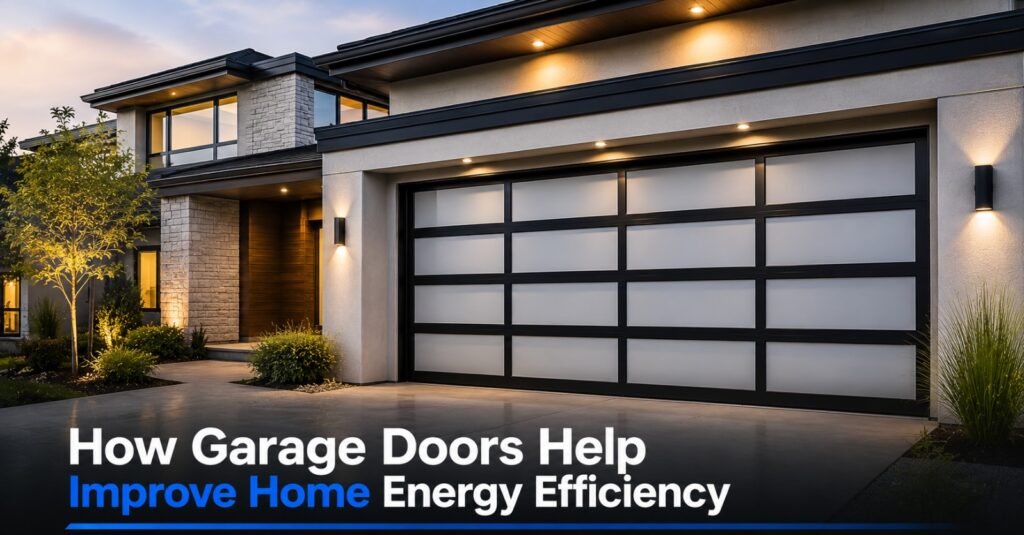
Most homeowners think about insulation in terms of attics, windows, and walls, and rarely consider the garage door as part of that equation.
At Alfa Garage Door, we regularly see attached garages acting as one of the biggest, most overlooked sources of temperature loss in a home, often long before anyone thinks to check the door itself.
If your garage shares a wall with a living space, your garage door plays a bigger role in home comfort than you might expect. Here’s how it actually works, and what to look for if yours might be falling short.
Why Your Garage Door Affects More Than Just the Garage
An attached garage isn’t a fully separate structure. Heat and cold move through shared walls, and a poorly insulated garage door lets outdoor temperatures swing more dramatically inside that space, which then affects nearby rooms more than most homeowners realize.
Understanding R-Value and What It Actually Means
R-value measures a material’s resistance to heat flow. The higher the number, the better the door performs at keeping temperature-controlled air where it belongs, whether that’s warmth in winter or coolness in summer.
Single, Double, and Triple-Layer Construction
Single-layer doors offer little to no insulation. Double-layer doors add a foam core between two steel skins, while triple-layer doors add a third layer for the highest thermal performance, particularly useful in climates with real seasonal extremes.
How Insulation Core Material Affects Performance
Polyurethane insulation generally outperforms polystyrene, since it expands to fill the entire panel cavity and bonds directly to the steel skins, creating a more rigid, better-insulated structure overall. Polystyrene still offers a meaningful improvement over no insulation, just to a lesser degree.
The Role of Weatherstripping and Seals
Bottom Seals
The seal along the bottom of the door closes the largest gap between the door and the ground, making it one of the most important seals for blocking drafts.
Side and Top Seals
These seals close the gaps along the door’s sides and top edge, preventing air infiltration around the frame itself.
Threshold Seals
Installed on the garage floor rather than the door, threshold seals block water and air from sneaking underneath, especially useful on uneven concrete surfaces.
Material Choice and Thermal Performance
Insulated steel doors tend to offer the most consistent thermal performance overall. Wood doors can perform well but vary depending on thickness and construction. Aluminum doors require a thermal break, a design feature that prevents heat from conducting straight through the frame, to perform reasonably well in colder climates.
Balancing Insulation With Proper Ventilation
Sealing a garage tightly for energy efficiency shouldn’t come at the expense of adequate airflow. Garages still need some ventilation to prevent moisture buildup, especially if vehicles are parked inside during wet or snowy weather.
A well-designed door and seal system manages this balance without sacrificing thermal performance, but it’s worth mentioning to an installer if your garage has had moisture or condensation issues in the past, since the solution may involve more than the door itself.
How an Insulated Door Affects the Rest of Your Home
A well-insulated, properly sealed garage door helps stabilize temperature swings in the garage itself, which reduces the strain on heating and cooling for any adjacent living space. It can also help protect pipes running through or near the garage from freezing during severe cold snaps.
Seasonal Considerations for the Midwest Climate
Winter tends to get most of the attention when people think about insulation, and for good reason given how cold it gets across the region.
But summer heat matters too, since a well-insulated door helps keep excess heat from radiating into the garage and nearby rooms during peak summer months, keeping cooling systems from working harder than necessary.
Small Habits That Support Energy Efficiency
- Minimize how long the door stays open during extreme weather
- Check weatherstripping each season for cracks or gaps
- Seal any visible light gaps around the door’s edges promptly
- Consider a smart opener with an automatic close timer to prevent accidental extended openings
- Monitor door status remotely through a smart opener app if you’re frequently away from home during extreme weather
Common Mistakes That Undermine Garage Door Energy Efficiency
- Ignoring worn weatherstripping. A small crack lets in far more air than it looks like it should.
- Leaving the door open unnecessarily. Extended open time defeats the purpose of any insulation the door provides.
- Skipping insulation on an attached garage door. This is one of the more common oversights, especially in older homes.
- Forgetting about gaps around windows or vents. Insulation on the door itself doesn’t help if air is escaping elsewhere on the same wall.
Is Upgrading Insulation Worth It for an Existing Door?
Retrofit insulation kits can improve performance on an existing door without full replacement, though they generally don’t match the performance of a door insulated during manufacturing.
For older, single-layer doors on attached garages, discussing both options with a professional helps clarify which approach makes the most sense for your specific situation.
Homeowners Across the Area Prioritizing Efficiency
Interest in garage door insulation tends to spike heading into winter across the region. Homeowners in Hampshire and Pingree Grove often ask about upgrading older single-layer doors before the coldest months arrive.
In Burlington and Volo, where many homes sit on larger, more exposed lots, weatherstripping and seal upgrades tend to come up just as often as insulation itself.
FAQs
Does an insulated garage door really make a noticeable difference?
Yes, particularly for attached garages, where temperature swings in the garage directly affect nearby living spaces.
What R-value should I look for in a cold climate?
Higher R-value doors, typically found in double- or triple-layer construction, perform noticeably better through harsh winters than single-layer options.
Can I add insulation to my existing garage door?
In many cases, yes, using a retrofit insulation kit, though a professionally insulated door will generally outperform an add-on solution.
Does garage door insulation help if my garage is detached?
It still helps regulate temperature inside the garage itself, though the impact on your home’s living spaces is less direct than with an attached garage.
How often should I check my garage door’s weatherstripping?
A seasonal check, especially before winter, catches most wear before it starts letting in noticeable drafts.
Contact Alfa Garage Doors Today
Need fast and reliable garage door service? Whether you need emergency garage door repair, garage door opener repair, spring replacement, maintenance, or a brand-new garage door installation, the experienced team at Alfa Garage Doors is ready to help. We proudly provide professional garage door services throughout Illinois with quality workmanship, affordable pricing, and 24/7 availability.
Get in Touch With Us
Phone: +1 (847)749-6700
Website: alfagaragedoors.net
Final Thoughts
A garage door does more than open and close; it plays a real role in how efficiently your home holds onto conditioned air. Between insulation level, material choice, and properly maintained seals, small decisions here add up to a meaningful difference across a full year of Midwest weather.
If your current door is older or clearly under-insulated, it’s worth having a professional take a look before another extreme season puts it to the test.
Summary
Garage doors improve home energy efficiency through insulation layers, R-value, and proper weatherstripping, which reduce temperature swings in attached garages. This lowers strain on nearby living spaces, especially through harsh Midwest winters and summers, making insulation and seal quality genuinely important factors in overall home comfort.