
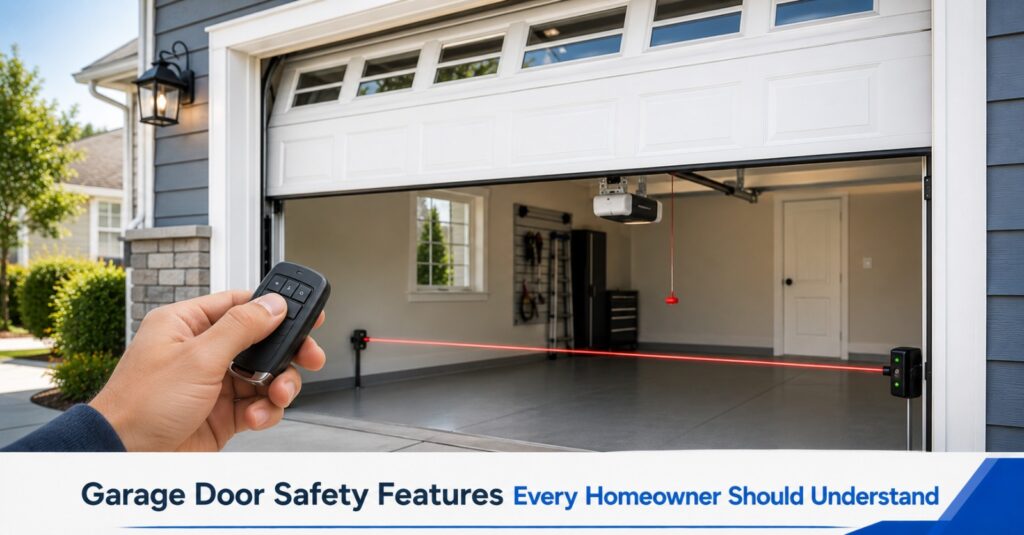
A garage door is one of the largest, heaviest moving objects in most homes, yet the safety features built into it rarely get a second thought until the moment they’re actually needed.
At Alfa Garage Door, we think every homeowner should understand what these features do, not just that they exist.
Here’s a clear breakdown of the safety systems working quietly behind the scenes every time your door opens or closes.
Why Garage Door Safety Standards Exist
Garage door openers weren’t always required to include the safety features we now take for granted. Federal safety requirements have mandated auto-reverse technology on residential openers since the early 1990s, following a string of serious entrapment incidents.
That history is part of why modern doors are designed the way they are today. Understanding these features isn’t just useful trivia; it’s a genuine part of using a garage door safely day to day.
The Auto-Reverse Safety Feature
How It Actually Works
If the door meets resistance while closing, whether from a person, pet, or object, it’s designed to stop and reverse direction immediately rather than continuing to close.
How to Test It Yourself
Place a block of wood or a similar object in the door’s path while it closes. A properly functioning door should reverse on contact right away. If it doesn’t, this needs professional attention immediately, since it’s one of the most safety-critical features on the entire system.
Photo-Eye (Infrared) Sensors
What They Do
These small sensors sit near the bottom of the tracks on either side of the door, projecting an invisible beam across the opening. If that beam is broken while the door is closing, it stops the door before it can make contact.
Common Reasons They Stop Working Properly
Dust, cobwebs, or a sensor that’s been slightly bumped out of alignment are the most common culprits. A blinking light on the opener unit often signals a sensor issue worth checking right away.
The Manual (Emergency) Release Cord
When You’d Actually Need It
This cord disconnects the door from the opener, letting you open or close it by hand during a power outage or if the opener fails while something urgent, like a trapped vehicle, needs attention.
A Word of Caution About Using It
Only use this if the springs and cables appear intact. If a spring is broken, releasing the opener can cause the door to drop suddenly, since nothing is left supporting its weight.
Spring Containment Cables
Extension spring systems typically include a safety cable that runs through the center of the spring. If the spring breaks, this cable helps contain it rather than letting it become a fast-moving projectile, a genuinely serious risk without this feature in place.
Pinch-Resistant Panel Design
Many modern doors are designed with panel edges shaped specifically to reduce pinch points between sections as the door moves. This is a small design detail with a real safety purpose, especially in homes with curious kids around the garage.
Rolling Code Technology
Every time you press your remote, rolling code technology generates a new, unique signal instead of reusing the same one. This prevents someone from capturing and reusing your remote’s signal to gain unauthorized access, a meaningful security layer most homeowners never think about.
Battery Backup Systems
A battery backup keeps the opener functional during a power outage, which matters more than it might seem. Without one, a power outage can leave a vehicle trapped inside or a door stuck partially open, creating both a security and safety concern until power returns.
External Quick-Release for Garages Without House Access
Detached garages or those without a direct interior door benefit from an external quick-release, which allows manual operation from outside without needing to access the opener unit itself.
Timer-to-Close and Auto-Lock Features
Some openers include a timer-to-close feature that automatically shuts the door after a set period if it’s been left open. This reduces the risk of an open garage going unnoticed overnight or while a homeowner is away.
Older Doors vs. Modern Safety Systems
If your home has an older garage door or opener, it’s worth checking which of these features it actually includes.
Auto-reverse and photo-eye sensors are required on any opener manufactured after the early 1990s, but a door that predates that standard, or one that’s had its opener swapped without updating other hardware, may be missing protections that are now considered standard.
This is especially common in older homes where the original door was never fully replaced, only repaired piece by piece over the years. A quick professional check can confirm whether your current setup meets today’s safety expectations and, if not, what it would take to bring it up to standard.
How to Make Sure These Features Are Actually Working
Most of these systems are easy to check but easy to forget. Testing the auto-reverse feature, wiping down the photo-eye sensors, and confirming the manual release cord is accessible only take a few minutes, yet they’re often skipped entirely once a door is installed and working.
Pairing these checks with your regular maintenance routine, rather than treating them as a separate task, makes it far more likely they’ll actually get done.
Homeowners Across the Area Prioritizing Safety
Interest in these features often picks up after a close call or a new addition to the household. Homeowners in Island Lake and Wonder Lake frequently ask about auto-reverse testing after bringing home a new pet.
Those in Hawthorn Woods and Fox River Grove more often prioritize battery backup systems, given how often winter storms affect power in the area.
FAQs
How do I test my garage door’s auto-reverse feature?
Place an object like a block of wood in the door’s path while it’s closing. The door should stop and reverse immediately on contact.
What should I do if my photo-eye sensors aren’t working?
Start by cleaning the sensor lenses and checking their alignment. If the issue continues, it’s worth having a professional inspect the wiring and settings.
Is it safe to bypass a broken safety sensor temporarily?
No. Operating a door with a disabled safety sensor removes one of its most important protections and should be avoided until it’s repaired.
Do all garage door openers have rolling code technology?
Most modern openers include it, but older units may not. If you’re unsure, checking with the manufacturer or a technician can confirm what your system has.
What’s the difference between the manual release and the external quick-release?
The manual release cord is used from inside the garage, while the external quick-release allows the same function from outside, useful for detached garages or homes without interior access.
Contact Alfa Garage Doors Today
Need fast and reliable garage door service? Whether you need emergency garage door repair, garage door opener repair, spring replacement, maintenance, or a brand-new garage door installation, the experienced team at Alfa Garage Doors is ready to help. We proudly provide professional garage door services throughout Illinois with quality workmanship, affordable pricing, and 24/7 availability.
Get in Touch With Us
Phone: +1 (847) 749-6700
Final Thoughts
These safety features work best when homeowners actually understand what they do and check on them occasionally. None of them require special expertise to test or maintain, just a basic awareness that they’re there for a reason.
Taking a few minutes to understand and test these systems is one of the simplest ways to keep your home, your family, and your garage door running safely for years to come.
Summary
Key garage door safety features include auto-reverse technology, photo-eye sensors, spring containment cables, and the manual release cord. Understanding how each one works and testing them regularly helps homeowners prevent injuries and catch developing safety issues before they turn into serious, dangerous problems.