
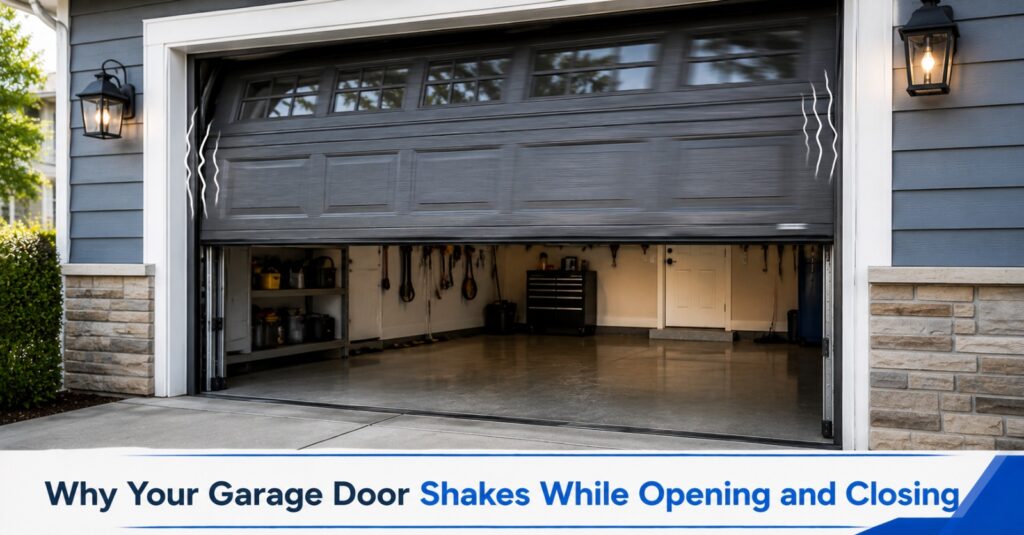
A garage door that shakes, wobbles, or rattles as it moves is unsettling to watch, even if it still technically opens and closes.
At Alfa Garage Door, this is one of the more common concerns homeowners call about, and the good news is that the cause is almost always identifiable once you know what to look for.
Here’s a breakdown of what typically causes a shaking door, and how to narrow down which one applies to yours.
Is a Shaking Garage Door Actually a Problem?
A little vibration during operation is normal, especially near the opener itself. But visible wobbling, side-to-side movement, or shaking strong enough to notice from across the garage usually points to a specific mechanical cause worth investigating.
Worn or Damaged Rollers
How to Spot Roller Wear
Rollers guide the door along the tracks, and cracked, flattened, or worn rollers create noticeable shake with every rotation. Watch the rollers while the door moves. Visible wobble, chips, or grinding at that specific point is a strong sign they need replacing.
Loose Hardware and Fasteners
Vibration and loose hardware tend to feed each other. Once a few bolts or brackets loosen slightly, the resulting shake loosens them further, which is why a shaking door often gets progressively worse rather than staying the same.
Bent or Misaligned Tracks
What Causes Tracks to Bend
A minor bump from a vehicle, stored items leaning against the track, or general age-related warping can throw a track slightly out of alignment. Even a small bend forces rollers to fight against the track rather than glide smoothly through it.
An Unbalanced Door
When spring tension isn’t even on both sides, the door lifts unevenly, which often shows up as jerky, uneven movement rather than smooth, consistent motion. This is worth having checked, since spring issues carry real safety considerations beyond just the shaking itself.
Opener Chain or Belt Issues
Chain-Drive Specific Causes
A loose or worn chain can cause noticeable shaking and rattling, particularly as the door starts moving. Chain tension naturally loosens over time and occasionally needs adjustment.
Belt-Drive Specific Causes
Belt-drive openers run quieter overall, so shaking here often points to a worn belt, a damaged trolley, or an issue with the opener’s motor rather than the belt itself.
Worn or Dry Hinges
Stiff, dry hinges don’t move as smoothly through each cycle, which can translate into a jerky, shaky motion at the panel seams. This is often paired with a squeaking sound and is one of the easier causes to rule out with a simple lubrication check.
Debris or Obstructions in the Tracks
Small objects, dirt buildup, or leaves lodged in the track create resistance in specific spots, causing the door to catch and shake as it passes over them. This is one of the simplest causes to check and clear yourself.
How to Narrow Down the Cause Yourself
Watch the door operate a few times, paying attention to exactly where the shaking happens. Shaking near the top often points to the opener or trolley connection, while shaking at a specific roller usually means that roller is worn.
Shake throughout the entire motion more often suggests a track or balance issue affecting the whole system, rather than a single failing part. Narrowing this down before calling for help also gives a technician a useful head start.
When Shaking Signals a Bigger Problem
Shaking paired with grinding, popping, or a sudden change in how the door sits when open are signs worth taking seriously. These combinations often point toward spring or cable wear rather than a simple roller or hardware issue, and that distinction matters for your safety.
Could Your Opener’s Force Settings Be Involved?
Most openers have adjustable force settings that control how much resistance the motor applies before stopping. If these are set too high, the opener can push through minor resistance, like a slightly bent track or a stiff roller, that would otherwise cause it to stop or reverse.
This means a shaking door isn’t always purely mechanical. Sometimes the opener is simply forcing its way through a smaller issue rather than responding to it, which can mask a problem until it grows large enough to shake the whole door noticeably.
A technician can check whether these settings are contributing to what you’re seeing.
Common Mistakes When Diagnosing a Shaking Door
- Assuming it’s always the opener. Openers get blamed often, but the real cause is frequently somewhere else in the system.
- Ignoring it because the door still works. Shaking tends to worsen and cause more damage the longer it’s left unaddressed.
- Tightening random bolts without finding the source. This can mask a symptom temporarily without solving the actual problem.
- Attempting to bend a track back into place. This requires precise alignment and is easy to get wrong without the right tools.
How to Prevent Shaking From Coming Back
Routine lubrication, periodic hardware checks, and clearing track debris regularly go a long way toward preventing most of these causes before they start. Pairing this with an annual professional inspection catches wear on rollers, tracks, and balance before it becomes noticeable shaking in the first place.
Homeowners Across the Area Noticing This Issue
This tends to come up regardless of a home’s age, though the specific cause often varies. Homeowners in Lake Barrington and Prairie Grove more frequently trace shaking back to worn rollers on older doors.
Those in Spring Grove and Lakewood often find the culprit is loose hardware that simply hadn’t been checked in a while.
FAQs
Is it normal for a garage door to shake a little?
A small amount of vibration, especially near the opener, is fairly normal. Noticeable wobbling or shaking throughout the motion usually isn’t normal and is worth investigating.
Can a bad garage door opener cause the door to shake?
Yes, particularly with a worn chain, belt, or trolley connection, though the door hardware itself is just as often the actual cause.
Should I stop using my garage door if it’s shaking badly?
If the shaking is severe or paired with grinding or popping sounds, it’s safer to avoid using the door until it’s been inspected.
Can I fix a shaking garage door myself?
Simple causes like loose hardware or track debris are reasonable for a homeowner to address. Anything involving springs, cables, or track alignment is best left to a professional.
Why does my garage door only shake near the top or bottom?
Shaking isolated to one section often points to a specific roller, hinge, or track section in that area rather than a system-wide issue, which makes diagnosis easier.
Contact Alfa Garage Doors Today
Need fast and reliable garage door service? Whether you need emergency garage door repair, garage door opener repair, spring replacement, maintenance, or a brand-new garage door installation, the experienced team at Alfa Garage Doors is ready to help. We proudly provide professional garage door services throughout Illinois with quality workmanship, affordable pricing, and 24/7 availability.
Get in Touch With Us
Phone: +1 (847) 749-6700
Final Thoughts
A shaking garage door is rarely a mystery once you know where to look. Whether it’s a worn roller, loose hardware, or a track slightly out of alignment, most causes are identifiable with a careful look and a few minutes of observation.
If the shaking persists or seems to be getting worse, don’t wait it out. Catching the cause early usually means a simpler, smaller fix than waiting for it to progress further.
Summary
A garage door shaking while opening or closing is usually caused by worn rollers, loose hardware, misaligned tracks, or an unbalanced spring system. Watching where the shaking occurs helps narrow down the cause, though grinding or popping sounds alongside it should prompt a professional inspection right away.